
Bedtime Stalling Tactics: Why Kids Delay Sleep (And How to Gently End Them)
“One more cuddle.” “I need water.” “I'm not even tired.” If bedtime in your house involves a parade of delay tactics, here's why it happens and how a calm, predictable wind-down (with a story built in) can bring it to an end.
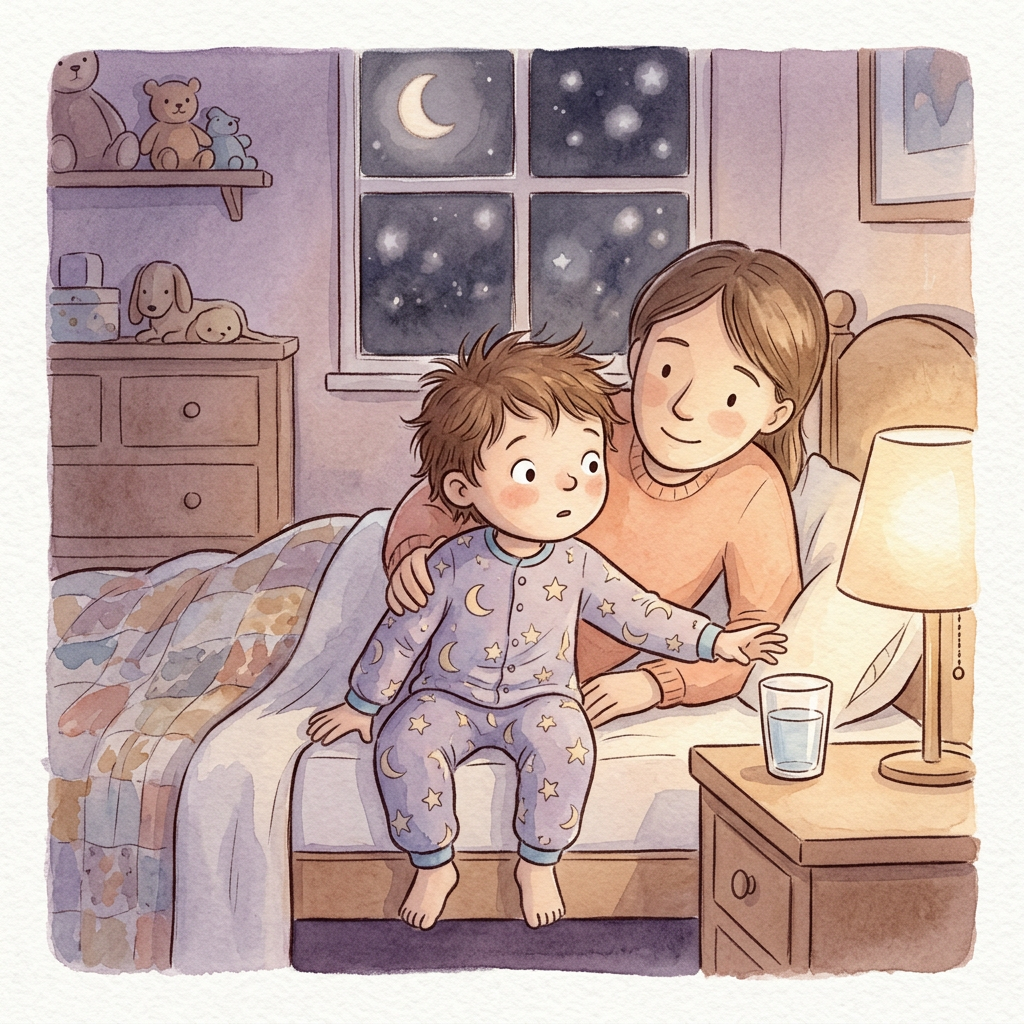
“One more cuddle.” “I need the toilet again.” “Can you check for monsters?” “I'm not even tired.” If any of these sound familiar, you are not doing anything wrong, and your child is not trying to wind you up. Bedtime stalling is one of the most common things parents ask about, and it has a surprisingly simple explanation: for a small child, bedtime means separation, and separation is hard.
Why children stall at bedtime
A toddler or young child doesn't yet have the vocabulary to say “I don't want this lovely day with you to end” or “my brain is still buzzing from everything that happened today.” So instead, they ask for water. They remember something urgent about their teddy. They need you to check under the bed one more time. Every request buys a few more minutes of your company, and a few more minutes of feeling safe before the lights go off.
There's also a developmental piece at play. Around the toddler and preschool years, children are becoming more aware of themselves as separate from you, and more aware that the world carries on without them while they sleep. That's a genuinely big feeling for a small person, and stalling is often just an attempt to manage it the only way they know how: by staying close to you a little longer.
Understanding this doesn't mean the stalling has to go on forever. It means the fix isn't sterner boundaries, but a routine that meets the need for closeness and predictability head-on, so there's less reason to stall in the first place.
What actually helps
1. Front-load the connection, not the policing. Stalling tends to shrink when children get a solid, unhurried chunk of your full attention before “lights out” is even mentioned, rather than rationed out one stalling tactic at a time. Ten focused minutes of cuddling in for a story tends to do more than forty minutes of negotiating over water and toilet trips.
2. Keep the sequence identical, every night. Children stall less when they know exactly what's coming next, because there's nothing to negotiate. Bath, pyjamas, teeth, story, lights low, goodnight — in the same order, at roughly the same time, is far more calming than a routine that varies by mood or day of the week.
3. Deal with the requests once, in advance. Put the water glass on the nightstand before the story starts. Do the monster check as part of the routine, not as a response to a stalling request. If a need is already met before your child thinks to ask, there's nothing left to stall with.
4. Give the goodbye a proper landing spot. A story is a brilliant tool here, because it gives the separation a clear, cosy middle step rather than an abrupt “right, bed now.” Hearing a story read or told to them, with you right there, lets a child drift from “fully with you” to “settling alone” gradually rather than suddenly — which is exactly where a lot of the anxiety behind stalling lives.
5. Stay boring and warm about limits. Once the story is finished and the lights are low, keep your responses to further requests brief, kind, and consistent: “I know. Water's right there. Night night.” No lecture, no negotiation, no new activities. Consistency here, repeated calmly over several nights, is what actually closes the loop — not any single clever trick.
Where Wispalo fits in
This is exactly the spot a bedtime story is built for. A Wispalo story puts your child at the centre of their own gentle adventure — built around the themes, interests, and people they actually know and love — so the story itself becomes part of the pull toward bed, not something to be negotiated around. You can create a free story in a couple of minutes on your phone, right from the sofa or the edge of the bed, with your child's name, age, and interests feeding into something made just for them. Subscribers on Wispalo Plus or Wispalo Premium can also add warm, narrated audio, so on a night when you need both hands free (or your voice has simply run out), the story still gets told.
None of this will end bedtime stalling overnight, and that's fine — it's a phase almost every family passes through, not a problem with your child or your parenting. But a predictable, connection-first routine, with a story that your child is genuinely excited to get to, tends to close the gap between “I'm not tired” and actually drifting off, one calm night at a time.
Ready to try it tonight? Create your child's first free story at Wispalo and see how a few minutes of their own personalised adventure can make the whole bedtime routine a little easier.
Try a story tonight
Wispalo turns your child into the hero of their own bedtime story in seconds.
Create a free story