
Clocks Going Back: How to Help Your Child's Bedtime Survive the Change
When the clocks go back, early dark evenings and earlier wake-ups can throw a child's bedtime completely off course. Here's a gentle way to keep the routine steady through the change.
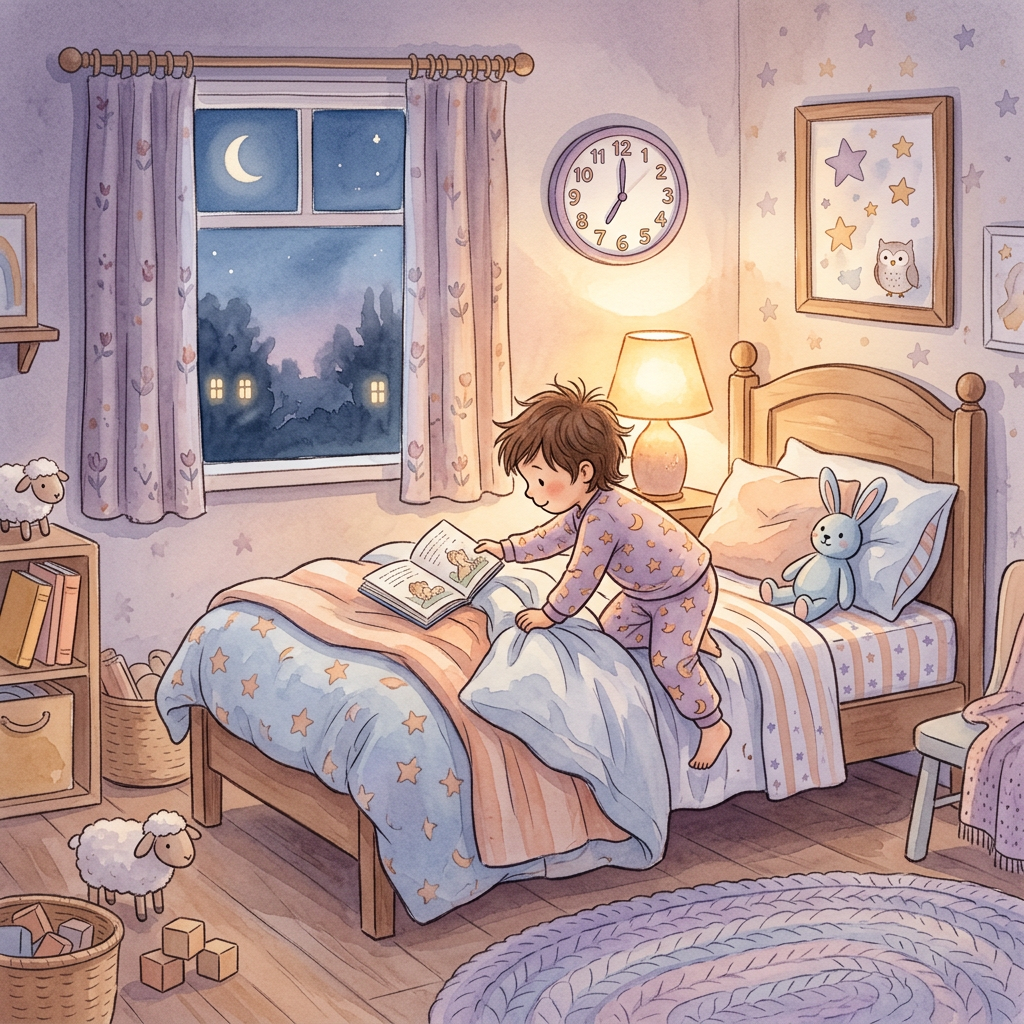
Every year it catches parents out in exactly the same way. The clocks go back, the evenings suddenly arrive an hour earlier, and a bedtime routine that took weeks to settle starts wobbling again. One night your child is wide awake and bouncing off the walls at what their body still thinks is six o'clock, and the next morning they're up before dawn, fully convinced it's time for breakfast.
It isn't your imagination, and it isn't a sign you've done something wrong. A child's body clock doesn't know what the calendar says — it runs on light, routine and repetition, and an hour's shift is enough to knock all three out of step for a little while. The good news is that with a bit of planning, most children settle back into rhythm within a week or so, and a few small, consistent habits can make that week a lot calmer for everyone.
Why the clock change hits children harder than adults
Grown-ups can reason their way through a time change — we know what the clock says and can override how we feel for a day or two. Small children can't do that in the same way. Their sense of "bedtime" is built almost entirely from cues: darkness falling, the bath running, the lights dimming, a familiar story being read. When the sun starts setting an hour earlier, all of those cues arrive earlier too, and a child's internal clock, driven largely by melatonin release in response to fading light, simply follows the light rather than the wall clock.
That's why you might notice a child seeming genuinely sleepy well before their usual bedtime for the first few days after the change — and then, confusingly, wide awake again once you try to put them down. Their body is adjusting in fits and starts, not all at once.
A gentler way through the change
Rather than trying to force the new time straight away, most sleep guidance for families suggests shifting gradually. In the days leading up to the clocks changing, nudging bedtime (and nap times, if your child still naps) by ten to fifteen minutes later each night gives their body a gentle runway rather than a sudden jolt. If you didn't manage to do that in advance, it's not too late — you can do the same thing in reverse over the following week, easing bedtime back towards its usual time night by night rather than all at once.
Light matters just as much as the clock itself. In the evening, keeping the main lights low and curtains or blinds closed earlier helps signal that it's winding-down time, even though it doesn't feel like "late" yet outside. In the morning, if early waking becomes a problem, letting a little daylight into the room (or, for very early risers, keeping the room a touch darker with blackout curtains) can help nudge their body clock back towards where you want it.
Keep the routine itself steady
While the clock is shifting underneath you, the single most useful thing you can do is keep the shape of the routine exactly the same. Children lean on predictability especially hard when something else feels unsettled, and bedtime is no exception. The same order of events — bath, pyjamas, teeth, into bed, a story, lights down — gives their nervous system something steady to hold onto even while the actual time on the clock is in flux.
This is where a bedtime story earns its keep as more than just a nice way to end the day. A familiar, calming ritual like this acts as a strong behavioural cue: by the time the story starts, a child's body already knows what's coming next, almost regardless of what the clock says. Keeping that part of the routine completely unchanged, even while you're adjusting timings around it, gives children one less thing to resist.
It's also a good moment to lean into stories that speak directly to what's changing. A short, gentle tale about the nights drawing in, or about a character who isn't quite sure why it's suddenly dark so early, can turn a confusing change into something your child feels a bit more in control of — which is often half the battle at bedtime.
This is exactly the kind of moment Wispalo was built for. You tell us a little about your child and what's on their mind — in this case, perhaps the dark evenings, or wanting the clock to make sense again — and we create a short, personalised story with them as the hero, complete with a cover illustration, ready to read together at exactly the point in the routine where it belongs. For a week where everything else feels a bit topsy-turvy, having one part of bedtime stay completely familiar can make all the difference. You can put one together in a couple of minutes at wispalo.com.
Clock changes are temporary, and so is the wobble they cause. Keep the routine steady, be patient with a few early mornings, and within a week or two your child's body — and yours — will have caught up with the new time, ready for bedtime stories as usual.
Try a story tonight
Wispalo turns your child into the hero of their own bedtime story in seconds.
Create a free story