
How to Help Your Child After a Nightmare (And Get Everyone Back to Sleep)
A calm, step-by-step guide for the 2am wake-up call — what to say, what to do, and how to help your child settle back to sleep after a nightmare without the whole house being awake for an hour.
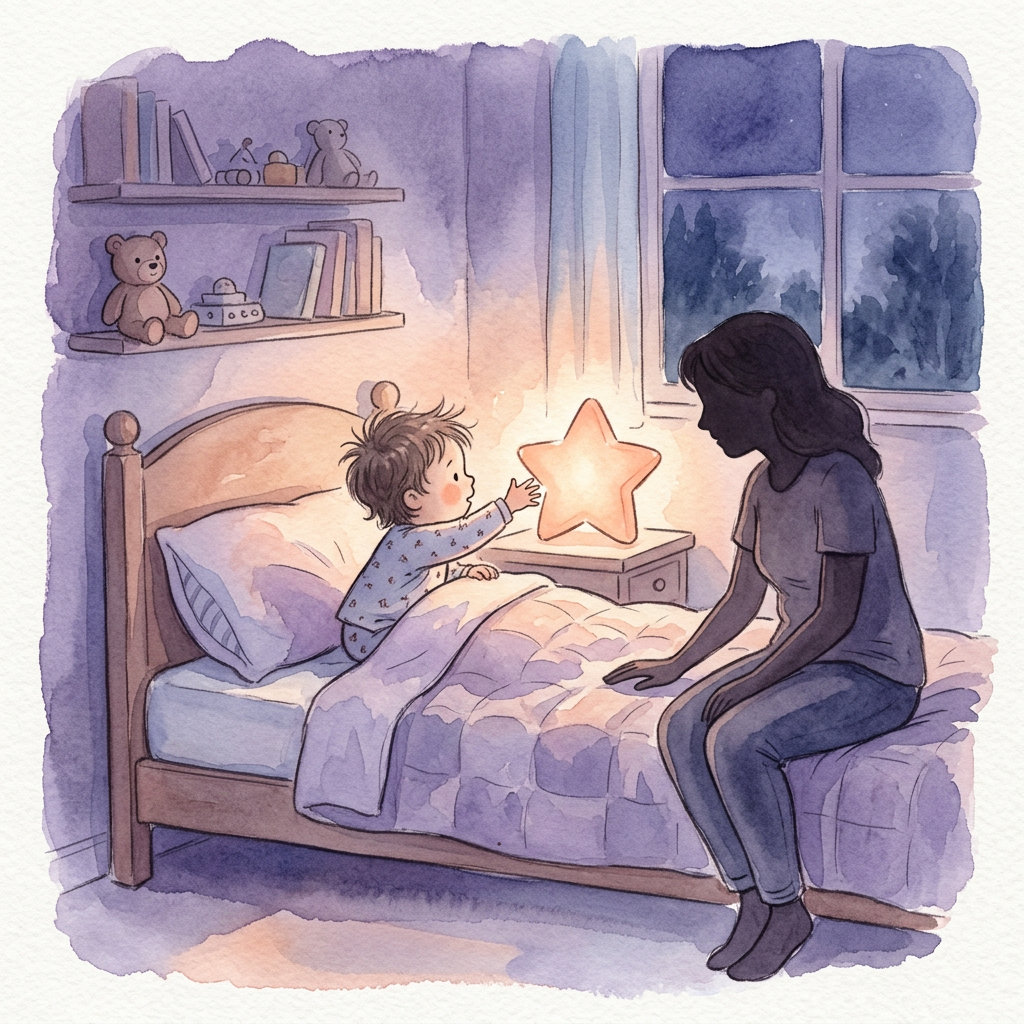
There is a particular kind of tired that only a 2am nightmare can produce. One moment you're asleep, the next you're being shaken awake by a small, frightened voice, and within seconds you're expected to be calm, reassuring, and vaguely coherent while your own brain is still catching up. If you've stood in a dark hallway at that hour wondering whether you're doing this right, you are very much not alone.
Nightmares are a completely normal part of childhood sleep, most common between the ages of three and six, and they tend to cluster around times of change — a new sibling, starting nursery or school, even a particularly exciting day. The good news is that how you respond in those first few minutes can make a real difference, both to how quickly your child settles and to how they feel about bedtime the next night.
First, go to them
It sounds obvious, but the instinct in the fog of 2am can be to call out reassurance from your own bed and hope that's enough. It rarely is. A child who has just woken from a nightmare needs your physical presence — not a lecture, not a full debrief, just you, there, in the room. Keep your voice low and slow. Your calm is doing more work than your words.
Separate the dream from the room
Young children don't always have a clear line between "that happened in my dream" and "that is happening in my room." A simple, matter-of-fact script helps: "That was a scary dream. It felt very real, but it's over now, and you're safe in your bed." You don't need to ask for details of the dream at 2am — that conversation, if your child wants to have it, is much better suited to breakfast, when there's daylight and nobody is desperate to get back to sleep.
Resist the cross-examination
It's tempting to ask "what happened?" out of genuine concern, but for a lot of children, recounting the dream in the middle of the night only rekindles the fear rather than defusing it. A gentle "do you want to tell me, or would you rather I just stay with you?" puts the choice in their hands.
Do a quick, boring safety check — once
If your child is asking you to check under the bed or in the wardrobe, it's usually worth doing it once, briskly and without drama, rather than refusing on principle. The goal is reassurance, not theatre, so keep it low-key: a quick look, a "all clear," and back to settling. If it becomes a nightly ritual that keeps expanding, that's worth gently phasing out over time rather than in the moment.
Keep the settling routine short and familiar
This is not the time for a brand new strategy. Whatever helps your child fall asleep at the start of the night — a particular blanket, a nightlight, a few minutes of quiet company — is usually what helps them fall back asleep now too. Familiarity itself is soothing when everything else feels unsettled.
What helps during the day, not just at night
A few daytime habits can make nightmares less frequent for children who are going through a patch of them:
Keep an eye on what they're watching or hearing before bed. Even content that seems mild to an adult — a slightly tense moment in a cartoon, a news report in the background — can resurface in a young child's dreams.
Watch for stress or change. Nightmares often increase around a big transition. Naming it gently during the day ("starting at the new nursery is a big change, isn't it?") can help some of that worry surface in smaller, more manageable ways before bedtime, rather than all at once in a dream.
Keep bedtime calm and unhurried. A rushed, stressed bedtime routine doesn't cause nightmares on its own, but a child who goes to sleep already a bit wound up is often more easily unsettled by one.
When to mention it to your GP
Occasional nightmares, even distressing ones, are a normal part of growing up and don't usually need any professional input. It's worth a chat with your GP or health visitor if nightmares are happening most nights over several weeks, if your child seems anxious or fearful during the day as well as at night, or if you're simply worried — trusting your own instinct as a parent is always a reasonable reason to ask.
Where a gentle story can help
For a lot of families, the real work happens not at 2am but earlier in the evening — building a bedtime that leaves a child feeling safe, calm, and a little bit brave before they even close their eyes. This is exactly the kind of moment Wispalo's "Feeling Worried" stories are designed for: a short, personalised story featuring your own child as the hero, gently working through a wobble like this one, read (or narrated) as part of your normal wind-down.
It won't stop nightmares from ever happening — nothing can promise that — but a calm, familiar story at the end of the day is a lovely way to send your child off to sleep feeling steady, which is often half the battle. You can try it for free at wispalo.com.
Nightmares are frightening for children and exhausting for parents, but they pass — both the individual night and, usually, the phase itself. In the meantime, a quiet voice, a familiar routine, and a bit of patience at 2am go a long way.
Try a story tonight
Wispalo turns your child into the hero of their own bedtime story in seconds.
Create a free story