
Moving to a New Home: A Bedtime Story to Help Your Child Feel Settled
Moving house can unsettle even the most easygoing child. Here's how a personalised bedtime story can help them feel safe, excited, and ready for their new home.
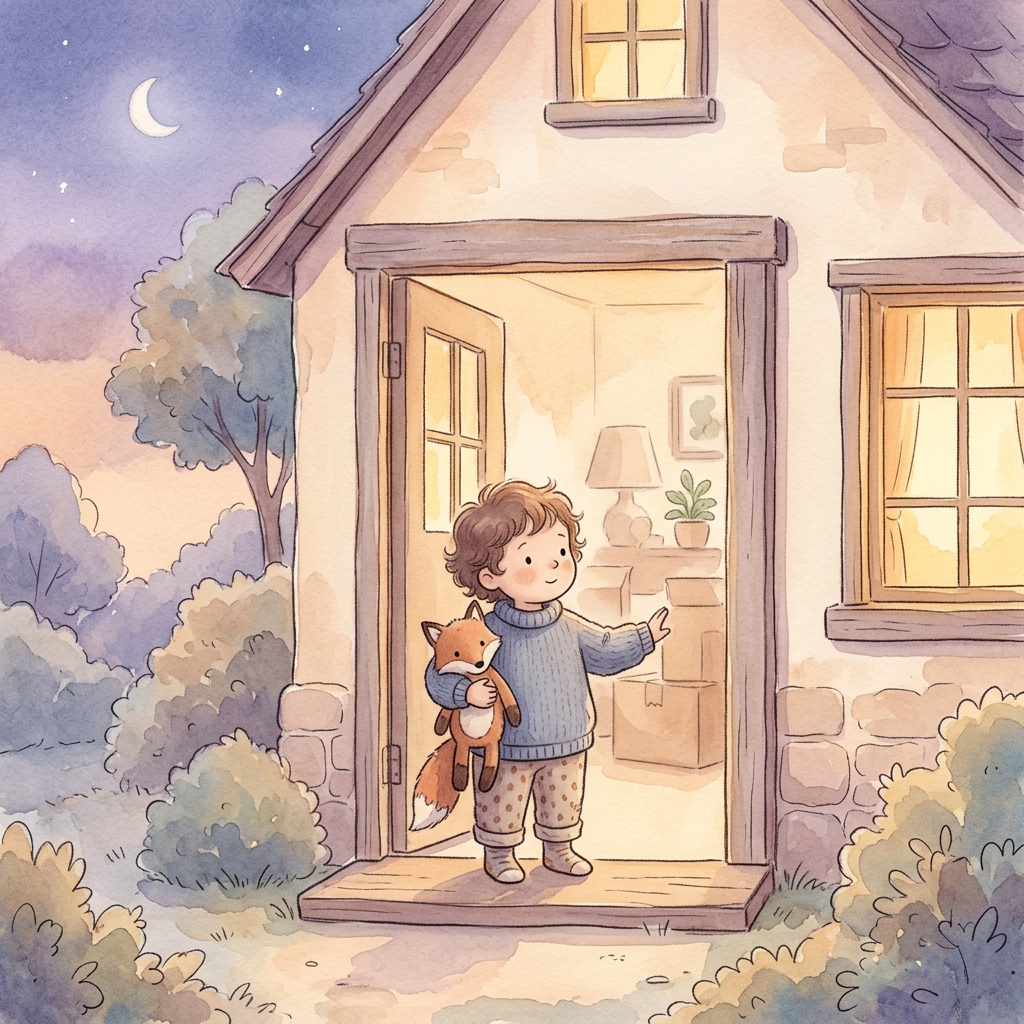
Moving house is one of the biggest upheavals a small child can face — and it often catches parents off guard just how much it unsettles them. The boxes, the new bedroom, the unfamiliar creaks at night: even a move to a lovely new home can leave a child feeling wobbly, and that wobble tends to show up most at bedtime, when the day's distractions fall away and the big feelings finally have room to surface.
The good news is that a house move, handled gently, can also become something a child looks back on with real fondness — a story of adventure rather than loss. A bedtime story built around the move itself is one of the simplest, most effective ways to help that happen.
Why moving house hits bedtime so hard
Children build their sense of safety around the familiar: the same ceiling above their cot or bed, the same hallway light spilling under the door, the same sounds of the house settling for the night. When all of that changes at once, it's not the daytime that suffers most — most children can distract themselves with unpacking, exploring, meeting new neighbours. It's the quiet of bedtime, when there's nothing left to do but notice that everything feels different.
This is completely normal, and it isn't a sign you've done anything wrong. It's simply what happens when a child's whole physical world shifts underneath them. The most helpful thing a parent can do isn't to rush past the feeling ("you'll love it here soon!") but to sit with it gently and give it somewhere to go.
How storytelling helps
A bedtime story does something a straightforward pep talk can't: it lets a child process a big change from a safe emotional distance, through a character who is a little bit like them but isn't quite them. When the hero of the story packs up their favourite toys, says goodbye to their old room, and discovers something wonderful about the new one, a child gets to rehearse the whole arc of the move — the sadness, the uncertainty, and eventually the settling-in — without having to carry it all directly.
It also works because it's proactive rather than reactive. Rather than only responding to tears or clinginess in the moment, a story told in the days before or just after a move gets ahead of the anxiety, giving a child a framework for what's happening and reassurance that the wobbly feeling is temporary and shared by others (even brave story heroes feel it).
Building the story with your child
A few things make a moving-house bedtime story land well:
Name the feeling honestly. A story that skips straight to "and then everything was perfect!" can feel dishonest to a child who is genuinely sad about leaving their old room. Better to let the character feel a bit sad or nervous first — "the little fox looked back at her old den one last time and felt a lump in her throat" — before moving toward reassurance. Acknowledging the feeling is often what allows it to pass.
Keep something constant. Children find enormous comfort in the idea that not everything is changing — their favourite teddy is coming too, mum and dad are coming too, their own toothbrush and blanket are coming too. A story that gently repeats "but Bramble the bear came too" throughout is doing real emotional work, not just decorating the plot.
Give the new place a bit of magic. This is where storytelling can do something a straightforward conversation can't: turn the unknown into something worth being curious about, rather than only something to be endured. A hidden nook behind the wardrobe, a window that catches the morning sun just right, a garden that might (just might) have space for a treehouse — these small, specific, positive details give a child something to look forward to rather than only something to brace for.
Let the child be the hero. If your child is naturally cautious, a story where the character feels the same caution — and is brave anyway, in a small, age-appropriate way — tends to land far better than one where the character is fearless from the start. Bravery that has to be found is more useful to a real child than bravery that was never in question.
A simple bedtime routine for moving week
In the days around a move, keep bedtime itself as steady as you can even while everything else is in flux: same bath time if possible, same pyjamas, same short wind-down before the story. The story becomes the one part of the day that's reliably calm and familiar, which matters enormously when so much else genuinely isn't.
If your child has a specific worry — a new school, sharing a room differently, missing a particular friend or garden — naming that directly in the story, rather than keeping it generic, tends to help far more than a generic "moving is exciting!" tale.
This is exactly the kind of story Wispalo was built for. Tell us your child's name, their age, and a detail or two about the move — the old house, the new one, what they're most nervous or excited about — and Wispalo weaves it into a calm, personalised bedtime story with your child as the hero, ready to read (or have narrated) in minutes. Give it a try at wispalo.com the next time moving day is on the horizon.
Try a story tonight
Wispalo turns your child into the hero of their own bedtime story in seconds.
Create a free story