
Space Adventure Bedtime Stories: A Gentle Rocket Ride to Sleep for Little Astronauts
If your child dreams of rockets and spacesuits, a gentle space adventure bedtime story can turn that excitement into a calm, happy wind-down — here's how to make it work at bedtime rather than against it.
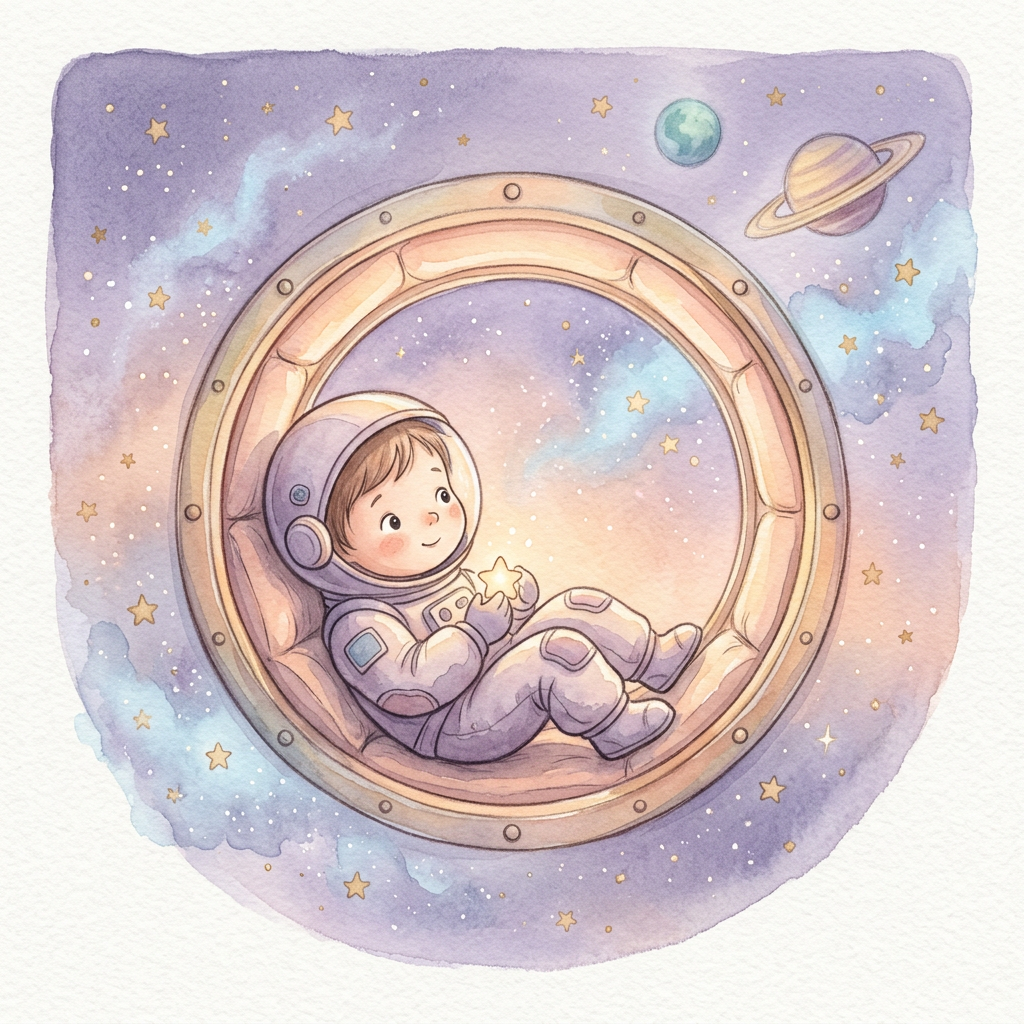
If there's one thing almost every small child has in common, it's a soft spot for space. Rockets, astronauts, planets lined up like marbles — it's the kind of excitement that can light up a four-year-old's whole face. The tricky part, for a parent trying to wind the evening down, is that excitement and bedtime don't always sit comfortably together. A space adventure bedtime story is one of the easiest ways to bring the two into the same room without a fight.
Why space captures children's imaginations so easily
Space has a particular pull for young minds because it's enormous, mysterious, and entirely safe to wonder about from the comfort of a bed. There's no monster hiding in a black hole, no one gets told off for floating about in zero gravity, and every question — "what's past the furthest star?", "could I breathe on the moon?" — is a genuinely good one with no wrong answer. Child-development researchers often point out that this kind of open-ended wonder is exactly the sort of thinking young children are wired to enjoy: it's imaginative, it's a little bit scientific, and it asks nothing difficult of them emotionally.
That combination — thrilling but not threatening — is actually quite rare in children's stories, and it's part of why space holds up so well as a bedtime theme rather than a daytime-only one.
The trick is in how you tell it, not just what it's about
Here's where a lot of space-themed bedtime stories go slightly wrong: they lean too hard into the adventure and not enough into the wind-down. A story with blaring alarms, a race against time, or a crash landing might be a brilliant afternoon tale, but at 7pm it can do the opposite of what you want — hearts racing instead of settling.
A gentle space adventure bedtime story keeps the wonder and drops the peril. Think slow, quiet exploration rather than danger: drifting past softly glowing planets, waving at a friendly comet, tucking the rocket in for the night just as a child tucks themselves in. The destination matters less than the mood. By the final page, the spaceship — and the child — should be winding down, not still accelerating.
A few ways to shape it that way, whether you're making this up on the spot or reading one together:
Make your child the astronaut, not a sidekick. Children settle into stories far more easily when they're the one steering, making the choices, noticing the details, deciding when it's time to head home — rather than watching someone else have the adventure.
Slow the pace deliberately. Floating is slower than running. Let the rocket drift. Let there be quiet moments where nothing much happens except looking out of the window at the stars. Those pauses are doing real work — they're the bits that actually help a wound-up child settle.
End with coming home, not arriving somewhere new. The most soothing space stories don't end with a dramatic landing on an alien planet; they end with turning the rocket back towards home, towards bed, towards the people who love them. It mirrors exactly what you want to happen next in real life.
Keep the science gentle, not accurate. You don't need real astrophysics. "The stars are having their own little bedtime" is a perfectly good explanation for a three-year-old, and far more useful at 7pm than facts about nuclear fusion.
A simple space bedtime routine to try tonight
If your child has been asking for space stories for weeks, here's a low-effort way to bring the theme into the existing routine rather than adding a whole new production to your evening:
- Dim the lights a little earlier than usual — it sets the "night sky" mood before the story even starts.
- Let your child choose one thing for their rocket to see on the way — a ringed planet, a sleepy comet, a cloud of stardust. One thing is enough; this isn't a tour of the solar system.
- Narrate slowly and let your voice drop as the story goes on, the same way you'd naturally quieten towards the end of any bedtime book.
- Bring the rocket home at the end, every time. Consistency here does a lot of the soothing work.
Where Wispalo fits in
This is exactly the kind of story Wispalo was built for. Our Space Adventure theme turns your own child into the hero of their own gentle rocket journey — personalised with their name, their age, and the things they're genuinely interested in, so the story feels like it was written just for them (because it was). Every story comes with its own cover illustration, and it only takes a couple of minutes to put together, which matters a lot on the nights when bedtime is already running late.
If your little one has been asking to be an astronaut, a space adventure bedtime story might be the easiest "yes" you give them all week. You can create one in a couple of minutes at wispalo.com — and if space isn't quite the theme they're after tonight, there's a gentle story for almost anything else on their mind too.
Try a story tonight
Wispalo turns your child into the hero of their own bedtime story in seconds.
Create a free story