
Why Bedtime Stories Help Kids Fall Asleep Faster (And Sleep Better)
The science behind why a calm bedtime story helps children settle faster — and a few small tweaks that make the story part of your routine work even harder.
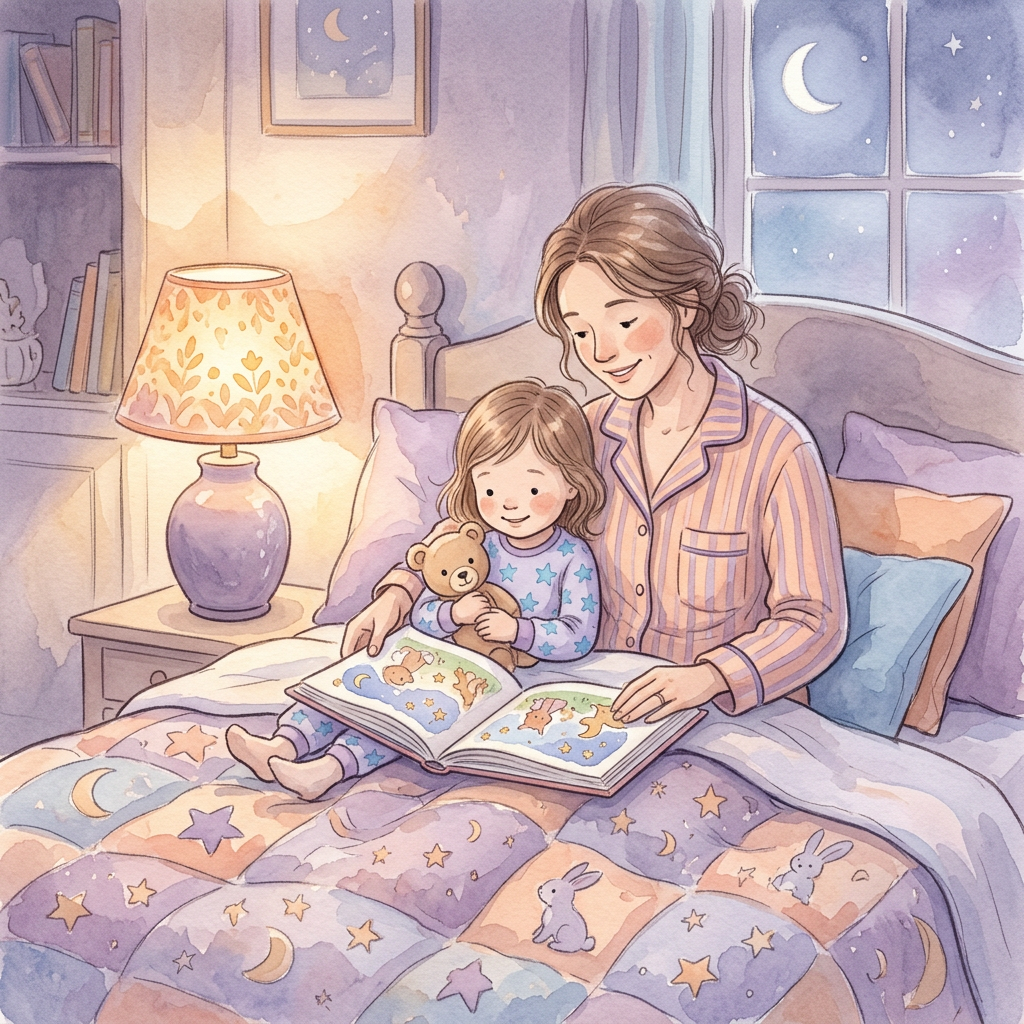
Most parents know the drill: bath, pyjamas, teeth, a story, lights out. It's such a familiar part of the evening that it's easy to do it on autopilot without ever asking why the story bit works quite so well. But there's real science behind why a bedtime story helps a child settle — and understanding it can help you get more out of those last few minutes of the day, even when you're exhausted and just want to switch the lights off.
It's not really about the plot
A three-year-old rarely remembers the details of last night's story by breakfast. What they do remember, on some level, is the feeling of it: a calm voice, a warm light, a grown-up who isn't rushing them anywhere. That's the real mechanism at work. A bedtime story is less a piece of entertainment and more a signal — a reliable, repeated cue that tells a child's nervous system the day is over and it's safe to let go.
Children (like adults) rely heavily on predictable routines to feel secure. A story is one of the easiest ways to build that predictability into the evening, because it has a beginning, a middle and an end. Once upon a time, something happens, and then it's sorted out. That neat little arc mirrors what you want bedtime itself to do: start slightly unsettled, move through something, and land somewhere peaceful.
The voice matters as much as the words
Sleep researchers have long pointed to the role of a parent's voice in helping children wind down. A slow, low, steady voice does something a screen simply can't: it regulates. Children pick up on tone long before they follow every word, and a gentle, unhurried reading voice can lower a child's heart rate and help shift them out of the wound-up energy that so often follows dinner, bath time and a house full of noise.
This is also why rushing the story — reading fast because you're tired, skipping pages, checking the time — tends to backfire. It's not really the words your child is falling asleep to. It's the pace.
Stories give worries somewhere to go
For a lot of children, bedtime is when the day's loose ends surface. The worry about tomorrow's spelling test, the argument with a friend, the thing they saw on telly that unsettled them — it often waits until the room goes quiet to show up. A story, especially one where a small character faces something a bit scary or new and comes through it fine, gives a child a gentle, indirect way to process that. They're not being asked to talk about their own worries directly (which can feel exposing for a young child); they're watching someone else manage a wobble and come out the other side.
This is part of why themed stories — a character starting school, a character meeting a new sibling, a character feeling nervous about the dark — tend to land so well. They let a child rehearse a feeling from a safe distance, tucked up in bed, with you right there.
Personalising it seems to help even more
There's a reason parents have always adapted stories on the fly, swapping in their child's name or a favourite toy as the hero. When a child hears themselves as the one being brave, or curious, or kind, it tends to hold their attention differently than a generic tale would. It's also a small, quiet way of saying: you are the kind of person who can do this. That's a nice thing to fall asleep believing, regardless of how the actual plot unfolds.
This is really the whole idea behind Wispalo. Rather than reaching for the same three books on rotation, you can create a personalised story that puts your own child at the centre — using their name, their age and the things they're currently into — for whatever moment they're in that night. Every story comes with its own cover illustration, so it feels like a little book made just for them rather than another chapter of something borrowed.
A few small things that make the story bit work harder
If you're looking to get more out of the story part of your routine without adding any extra time to it, a few small adjustments tend to help:
Keep the lighting low well before the story starts, not just during it — bright light in the ten minutes beforehand undoes a lot of the calming work the story is about to do. Try to read at roughly the same time each night; the consistency does more than the content. Slow down more than feels natural — most of us read faster than we think when we're tired. And where you can, let your child choose the theme or the world the story happens in; a small sense of control at the end of a day where they've had very little of it goes a long way.
None of this needs to be complicated. A five-minute story, read slowly, in a dim room, at roughly the same time each night, is doing a lot more work than it looks like from the outside.
Bringing it into your own routine
If your child has settled into wanting the same handful of stories over and over, that's completely normal — predictability is part of what makes them work. But if you're after something a little different some nights, particularly around a moment your child is going through right now, a personalised story can be a gentle way to freshen things up without losing any of that calming structure.
You can create a free story for your child at wispalo.com in a couple of minutes — pop in their name, age and interests, and let them be the hero of tonight's bedtime story.
Try a story tonight
Wispalo turns your child into the hero of their own bedtime story in seconds.
Create a free story